The field of forensic photography
What is Forensic Photography?
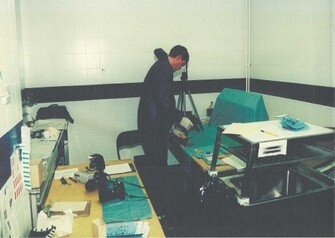
By applying the fundamental principle of photography, we can say that forensic photography is the art of reproducing an exact image of something, such as an event or an injury, among other things. This is considered to be the art of forensic photography. The application of the fundamental principle of photography demonstrates that this definition is still accurate. We are able to record the information that cannot be kept for an indefinite amount of time, such as a crime scene, injuries discovered during an autopsy, or forensic medical examinations for cases involving living people who have been the victims of physical violence, torture, or other similar things. This is because of the fact that we are able to record the information. Forensic investigators follow a process that includes photography as an essential component in order to create a visual record of the evidence that they have gathered during their investigations. Because photography has been incorporated into the legal system, forensic photography can now be presented in court as a valid piece of evidence. This is a consequence of the fact that photography has been integrated into the judicial system.
Forensic Photography
In the field of forensic photography, the term "crime scene" is utilized in every single instance. On the other hand, we frequently overlook the fact that forensic photography is also utilized in the course of clinical examinations, autopsies, human remains analysis, and various other types of medical investigations that are conducted in the course of both civil and criminal cases.
I would like to make the following statement: In my opinion, it is essential to differentiate between photographs taken at the scene of the crime and photographs taken for the purposes of a medico legal investigation. They are complementary to one another and contribute to the accomplishment of the same goal, despite the fact that they carry out their work in very different ways.
Crime Scene Photography
In the event of a homicide, a traffic accident, burglaries, explosions, or any other crime that was committed against people or property, the purpose of taking photographs at a crime scene is to provide a view of the location, people, and physical evidence that was involved. This is the case in situations where the photographs are taken. The viewpoint that is being presented here ought to be one that is precise, comprehensive, and impartial.
Medico-legal Photography
The purpose of taking photographs of any medical investigation, whether an autopsy, clinical examination, examination of human remains, or any other medical investigation, is to provide evidence for legal purposes regarding injuries, scars, cause of death, identification, or other medical facts in a civil or criminal case.
My Concept About Forensic Photography
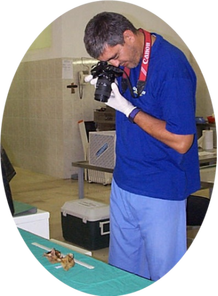
Forensic photography is the art of reproducing an image that is accurate and faithful, as well as recording information that cannot be kept for an indefinite amount of time during a forensic investigation. An individual who works in the field of forensic photography serves as "the eyes of the legal system."
In the field of forensics, the objective is to accurately record the finding, using the appropriate material, whether the evidence that is taken into consideration is visible or not to the naked eye. This is what photography is intended to accomplish. The advantage of this is that it is able to record details with precision, which the human eye might not have necessarily captured. It is imperative that every photograph be capable of being interpreted in a manner that does not leave any room for ambiguity. Furthermore, photographs should not be used in an attempt to influence or manipulate the feelings of individuals. A high-quality image can be helped along by a good camera, but the photographer is the one who decides whether a picture is good or bad. This is the last point, but it is an important one. It is likely that you are already aware of the fact that a good picture is the equivalent of a thousand words. This is something that I believe to be an important concept, and as a result, it is something that is brought up quite frequently in the photography workshops that I teach. One of the pioneers in the field of judicial photography, Alphonse Bertillon, is the subject of the following quote, which I would like to share with you. Bertillon is considered to be one of the pioneers. On page 46 of the third chapter of his book titled "La Photographie Judiciaire," which was published in the year 1890, Bertillon wrote the following information:
In the field of forensics, the objective is to accurately record the finding, using the appropriate material, whether the evidence that is taken into consideration is visible or not to the naked eye. This is what photography is intended to accomplish. The advantage of this is that it is able to record details with precision, which the human eye might not have necessarily captured. It is imperative that every photograph be capable of being interpreted in a manner that does not leave any room for ambiguity. Furthermore, photographs should not be used in an attempt to influence or manipulate the feelings of individuals. A high-quality image can be helped along by a good camera, but the photographer is the one who decides whether a picture is good or bad. This is the last point, but it is an important one. It is likely that you are already aware of the fact that a good picture is the equivalent of a thousand words. This is something that I believe to be an important concept, and as a result, it is something that is brought up quite frequently in the photography workshops that I teach. One of the pioneers in the field of judicial photography, Alphonse Bertillon, is the subject of the following quote, which I would like to share with you. Bertillon is considered to be one of the pioneers. On page 46 of the third chapter of his book titled "La Photographie Judiciaire," which was published in the year 1890, Bertillon wrote the following information:
Photography as a recording tool
Judicial photography is also involved in all criminal and civil matters, where it is vital to maintain an accurate, complete, and unbiased view of the place, things, and people.
The details of these, unknown to all but scrupulously recorded by photography, can acquire vital importance.